In a stunning display of resilience, Mike Tyson stepped into the ring at 58 years old for a high-profile bout against Jake Paul in November 2024, captivating millions on Netflix and reaffirming his status as a timeless figure in combat sports. This event, delayed by a severe health setback earlier that year, showcased not only his physical endurance but also his mental fortitude, drawing global attention to a man who has defied expectations throughout his life. Tyson transcends the role of a mere boxer; he embodies a cultural phenomenon, evolving from the ferocious “Baddest Man on the Planet” during his peak to a savvy entrepreneur and reflective thinker in later years. His journey reflects themes of triumph, adversity, and redemption, influencing generations beyond the ropes. As we examine his story in 2025, it’s clear that Tyson’s impact extends into business, media, and personal growth, making him a multifaceted icon.
| Attribute | Details |
|---|---|
| Height | 5’10” (178 cm) |
| Reach | 71″ (180 cm) |
| Record | 50-6 (44 KOs), 2 No Contests |
| Nicknames | Iron Mike, Kid Dynamite, The Baddest Man on the Planet |
Early Life: The Making of a Fighter
Born on June 30, 1966, in the tough neighbourhoods of Brownsville, Brooklyn, New York, Mike Tyson’s early years were marked by hardship and instability. Growing up in a single-parent household amid poverty, he faced frequent relocations and exposure to street violence from a young age. By his early teens, Tyson had already encountered the criminal justice system multiple times, with arrests for petty crimes like theft and fighting. These experiences forged a survival instinct but also led to a cycle of trouble, including time in juvenile detention centres. It was during one such stint that his path began to shift, as a counsellor recognised his raw physical potential and introduced him to boxing.
more:
Kim Kardashian Biography: From Reality Star to Business Mogul
The turning point came when Tyson met Cus D’Amato, a legendary trainer who became a pivotal father figure in his life. D’Amato, known for developing champions like Floyd Patterson, took the young Tyson under his wing in Catskill, New York, providing structure, discipline, and a stable home. Under D’Amato’s guidance, Tyson honed the iconic peek-a-boo style—a defensive technique emphasising head movement, bobbing, and weaving to close distances quickly while protecting against counters. This approach suited Tyson’s compact build and explosive power, transforming him from a street fighter into a disciplined athlete. D’Amato’s mentorship extended beyond the gym, instilling mental toughness and a philosophical outlook on life and combat.
As an amateur, Tyson’s prowess shone brightly in the Junior Olympics, where he dominated opponents with blinding speed and devastating knockout power. Stories of his 8-second knockouts became legendary, highlighting his ability to end fights almost instantly. These early victories built his confidence and set the stage for a professional career, proving that with the right guidance, even the most challenging beginnings could lead to extraordinary achievements.
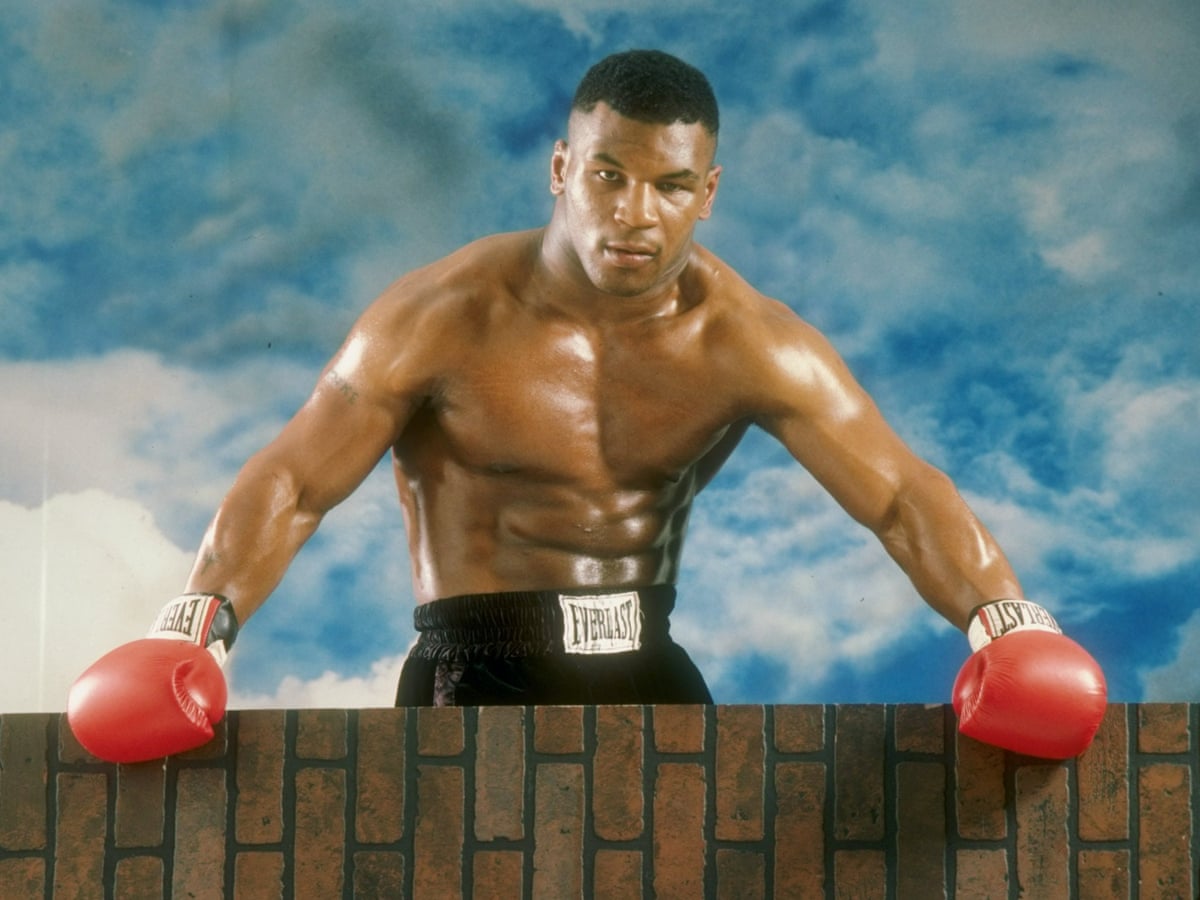
The “Kid Dynamite” Era: Youngest Heavyweight Champion
Tyson’s professional debut in 1985 marked the beginning of an explosive era, but it was 1986 that etched his name in history. At just 20 years old, he faced Trevor Berbick for the WBC heavyweight title in Las Vegas. Displaying ferocious aggression, Tyson overwhelmed Berbick with a barrage of hooks and uppercuts, securing a second-round knockout and becoming the youngest heavyweight champion ever. This victory not only shattered records but also signaled the arrival of a new force in boxing, one that combined youthful energy with seasoned skill.
Building on this momentum, Tyson pursued the unification of the division. He claimed the WBA title by dismantling James “Bonecrusher” Smith and then added the IBF belt after outclassing Tony Tucker. The pinnacle came in 1988 against Michael Spinks, an undefeated lineal champion. In a mere 91 seconds, Tyson unleashed a devastating combination that floored Spinks twice, ending the fight in the first round. This knockout solidified his status as the undisputed heavyweight king, with a record of 35-0 at that point, 31 by knockout.
Central to Tyson’s dominance was his unique fighting style. The bob-and-weave technique, inherited from D’Amato, allowed him to slip punches while advancing relentlessly. His short stature became an advantage, enabling low-angled attacks that targeted opponents’ midsections and jaws. Combined with raw power—often described as thunderous hooks capable of crumpling even the sturdiest fighters—Tyson’s approach was both tactical and intimidating. Opponents often appeared psychologically defeated before the bell, succumbing to his aura of invincibility. This era not only redefined heavyweight boxing but also elevated Tyson to global stardom, with earnings soaring and media frenzy following his every move.
The Fall: Controversy, Prison, and the Holyfield Bite
The 1990 upset against Buster Douglas remains one of boxing’s most shocking moments. Entering the Tokyo Dome as a massive favorite, Tyson appeared unprepared, having underestimated the challenger. Douglas, motivated by personal loss, exploited Tyson’s vulnerabilities with sharp jabs and movement. In the 10th round, a stunning uppercut and follow-up punches sent Tyson to the canvas for the first time, unable to beat the count. This defeat stripped him of his titles and exposed cracks in his invincibility, attributed to training lapses and personal distractions.
Legal troubles soon compounded his woes. In 1992, Tyson was convicted of rape following an incident in Indianapolis, leading to a three-year prison sentence. He served time in an Indiana facility, where he focused on self-reflection, reading, and converting to Islam. This period, handled with sensitivity here as a factual chapter, marked a low point, halting his career and tarnishing his public image amid intense scrutiny.
The 1997 rematch with Evander Holyfield, dubbed the “Bite Fight,” epitomized Tyson’s turmoil. Frustrated by headbutts and a prior loss to Holyfield, Tyson bit off a piece of his opponent’s ear in the third round, leading to disqualification. The incident, replayed endlessly worldwide, resulted in a license suspension and fines, further eroding his reputation. It highlighted the pressures of fame and personal demons, shifting perceptions from champion to controversial figure.
Reinvention: From Bankruptcy to Business Mogul (2005-2023)
Emerging from setbacks, Tyson pivoted to media in the mid-2000s. His memorable cameo in the 2009 film The Hangover reintroduced him to new audiences as a humorous, self-aware personality. This led to a one-man Broadway show in 2012, “Mike Tyson: Undisputed Truth,” where he candidly shared his life’s highs and lows. By 2019, his podcast Hotboxin’ with Mike Tyson gained traction, featuring deep conversations with celebrities on philosophy, mental health, and redemption.
A key pillar of his revival is Tyson 2.0, his cannabis venture launched in 2021. Capitalizing on legalization trends, the brand offers premium products like edibles and vapes, with clever marketing around his past. The “Mike Bites” ear-shaped gummies cleverly reference the Holyfield incident, turning controversy into profit. By 2025, Tyson 2.0 boasts valuations in the tens of millions, expanding globally and emphasizing quality strains.
Financially, Tyson rebounded from 2003 bankruptcy—where debts exceeded $23 million—through strategic investments and endorsements. Diversifying into real estate and merchandise, he rebuilt stability, proving adaptability beyond the ring.
Mike Tyson vs. Jake Paul: The 2024 Showdown
The intergenerational clash between 58-year-old Tyson and 27-year-old Jake Paul generated massive hype, streamed live on Netflix in November 2024. The 31-year age gap fueled debates on experience versus youth, with Paul’s social media savvy amplifying promotion to record viewership.
Originally set for July, the fight was postponed due to Tyson’s ulcer flare-up in June 2024 during a flight. This health scare was severe—he lost 25 pounds, required blood transfusions, and described it as near-death—raising concerns about his participation. Medical clearance eventually allowed rescheduling.
On November 15 at AT&T Stadium in Arlington, Texas, the eight-round exhibition unfolded. Paul dominated with speed and volume, landing cleaner shots while Tyson showed flashes of power but tired. Judges scored it 80-72 unanimously for Paul, yet Tyson completed all rounds, earning respect for his grit.
Post-fight, Tyson responded graciously, praising Paul’s skills and expressing no regrets. In early 2025, he firmly denied Parkinson’s rumors sparked by Paul’s podcast comments, affirming his health focuses on sciatica and recovery from the ulcer. The event boosted both careers, with Tyson gaining renewed admiration.

Mike Tyson’s Net Worth & Legacy in 2025
As of 2025, Tyson’s net worth is estimated at around $20-30 million, a remarkable recovery bolstered by the $20 million purse from the Paul fight and Tyson 2.0’s projected $75 million revenue. His cannabis empire, along with podcast earnings and endorsements, continues to grow, reflecting smart diversification.
Tyson’s legacy endures, inspiring modern heavyweights like Deontay Wilder with his power-punching style. In pop culture, he influences films, music, and memes, symbolizing resilience. From feared pugilist to thoughtful mogul, his story resonates widely.
Conclusion
Mike Tyson’s odyssey from a troubled Brooklyn youth to boxing’s youngest champion, through scandals and reinvention as a business leader and philosopher, cements him as a sports elder statesman in 2025. His ability to adapt and inspire remains unmatched. Dive deeper by tuning into Hotboxin’ with Mike Tyson or exploring his latest documentary for more insights.
Frequently Asked Questions (FAQ)
What is Mike Tyson’s official boxing record?
Tyson’s professional record stands at 50 wins (44 by knockout), 6 losses, and 2 no contests, spanning from 1985 to 2005, with exhibitions later.
Did Mike Tyson beat Jake Paul?
No, Tyson lost to Jake Paul by unanimous decision on November 15, 2024, with scores of 80-72 across the board, though he completed the full eight rounds.
How much is Mike Tyson worth in 2025?
In 2025, Tyson’s net worth is approximately $20-30 million, driven by the Jake Paul fight earnings and the expanding success of his Tyson 2.0 cannabis brand, which has seen significant valuation growth.
What health issues does Mike Tyson have?
Tyson deals with sciatica, which affects his mobility, and suffered a serious ulcer and internal bleeding episode in 2024 requiring transfusions. He has denied rumors of Parkinson’s disease in early 2025.